
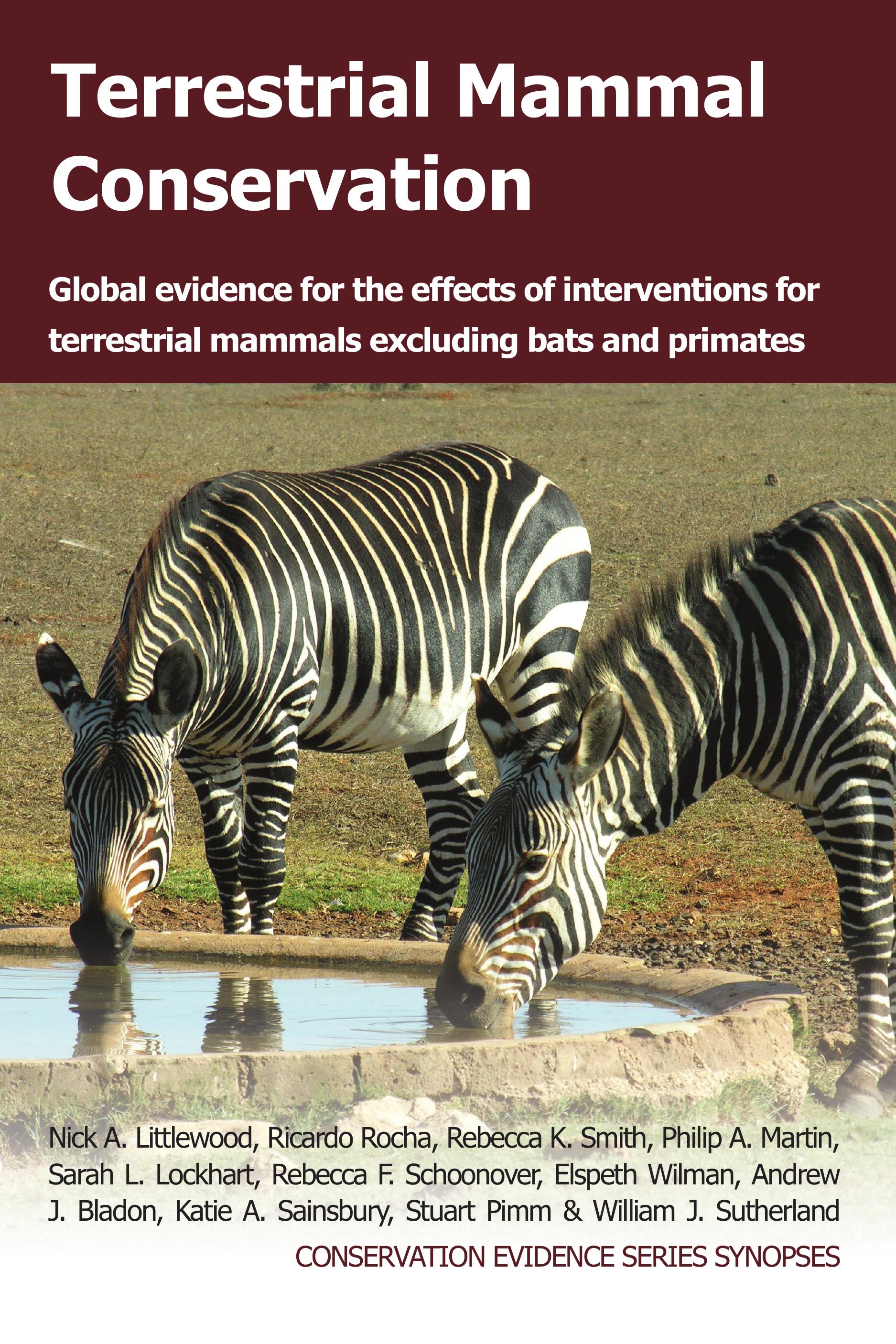
| Title | Terrestrial Mammal Conservation |
|---|---|
| Subtitle | Global Evidence for the Effects of Interventions for Terrestrial Mammals Excluding Bats and Primates |
| Contributor | Nick A. Littlewood(opens in new tab)(author) |
| Ricardo Rocha (author) | |
| Rebecca K. Smith(opens in new tab)(author) | |
| Philip A. Martin (author) | |
| Sarah L. Lockhart (author) | |
| Rebecca F. Schoonover (author) | |
| DOI | https://doi.org/10.11647/OBP.0234(opens in new tab) |
| Landing page | https://www.openbookpublishers.com/books/10.11647/obp.0234(opens in new tab) |
| License | http://creativecommons.org/licenses/by/4.0/(opens in new tab) |
| Copyright | Nick A. Littlewood; Ricardo Rocha; Rebecca K. Smith; Philip A. Martin; Sarah L. Lockhart; Rebecca F. Schoonover; Elspeth Wilman; Andrew J. Bladon; Katie A. Sainsbury; Stuart Pimm; William J. Sutherland |
| Publisher | Open Book Publishers |
| Publication place | Cambridge, UK |
| Published on | 2020-12-30 |
| ISBN | 978-1-80064-083-2 (Paperback) |
| 978-1-80064-084-9 (Hardback) | |
| 978-1-80064-085-6 (PDF) | |
| 978-1-80064-637-7 (HTML) | |
| 978-1-80064-088-7 (XML) | |
| 978-1-80064-086-3 (EPUB) | |
| 978-1-80064-087-0 (MOBI) | |
| Short abstract | Terrestrial Mammal Conservation provides a thorough summary of the available scientific evidence of what is known, or not known, about the effectiveness of all of the conservation actions for wild terrestrial mammals across the world (excluding bats and primates, which are covered in separate synopses). |
| Long abstract | Terrestrial Mammal Conservation provides a thorough summary of the available scientific evidence of what is known, or not known, about the effectiveness of all of the conservation actions for wild terrestrial mammals across the world (excluding bats and primates, which are covered in separate synopses). Actions are organized into categories based on the International Union for Conservation of Nature classifications of direct threats and conservation actions. Over the course of fifteen chapters, the authors consider interventions as wide ranging as creating uncultivated margins around fields, prescribed burning, setting hunting quotas and removing non-native mammals. This book is written in an accessible style and is designed to be an invaluable resource for anyone concerned with the practical conservation of terrestrial mammals. The authors consulted an international group of terrestrial mammal experts and conservationists to produce this synopsis. Funding was provided by the MAVA Foundation, Arcadia and National Geographic Big Cats Initiative. Terrestrial Mammal Conservation is the seventeenth publication in the Conservation Evidence Series, linked to the online resource www.ConservationEvidence.com(opens in new tab). Conservation Evidence Synopses are designed to promote a more evidence-based approach to biodiversity conservation. Others in the series include Bat Conservation, Primate Conservation, Bird Conservation and Forest Conservation and more are in preparation. Expert assessment of the evidence summarised within synopses is provided online and within the annual publication What Works in Conservation. |
| Print length | 1094 pages (xxvi+1068) |
| Language | English (Original) |
| Dimensions | 156 x 55 x 234 mm | 6.14" x 2.15" x 9.21" (Paperback) |
| 156 x 57 x 234 mm | 6.14" x 2.25" x 9.21" (Hardback) | |
| Weight | 3311g | 116.79oz (Paperback) |
| 3739g | 131.89oz (Hardback) | |
| OCLC Number | 1231606755 |
| LCCN | 2019394522 |
| BIC |
|
| BISAC |
|
| LCC |
|
| Keywords |
|
| Funding | |
|
Contents
- About this book
- Nick A. Littlewood
- Ricardo Rocha
- Rebecca K. Smith
- Philip A. Martin
- Sarah L. Lockhart
- Rebecca F. Schoonover
- Elspeth Wilman
- Andrew J. Bladon
- Katie A. Sainsbury
- Stuart Pimm
- William J. Sutherland
- Threat: Residential and commercial development
- Nick A. Littlewood
- Ricardo Rocha
- Rebecca K. Smith
- Philip A. Martin
- Sarah L. Lockhart
- Rebecca F. Schoonover
- Elspeth Wilman
- Andrew J. Bladon
- Katie A. Sainsbury
- Stuart Pimm
- William J. Sutherland
- Threat: Agriculture and Aquaculture
- Nick A. Littlewood
- Ricardo Rocha
- Rebecca K. Smith
- Philip A. Martin
- Sarah L. Lockhart
- Rebecca F. Schoonover
- Elspeth Wilman
- Andrew J. Bladon
- Katie A. Sainsbury
- Stuart Pimm
- William J. Sutherland
- Threat: Energy production and mining
- Nick A. Littlewood
- Ricardo Rocha
- Rebecca K. Smith
- Philip A. Martin
- Sarah L. Lockhart
- Rebecca F. Schoonover
- Elspeth Wilman
- Andrew J. Bladon
- Katie A. Sainsbury
- Stuart Pimm
- William J. Sutherland
- Threat: Transportation and service corridors
- Nick A. Littlewood
- Ricardo Rocha
- Rebecca K. Smith
- Philip A. Martin
- Sarah L. Lockhart
- Rebecca F. Schoonover
- Elspeth Wilman
- Andrew J. Bladon
- Katie A. Sainsbury
- Stuart Pimm
- William J. Sutherland
- Threat: Biological resource use
- Nick A. Littlewood
- Ricardo Rocha
- Rebecca K. Smith
- Philip A. Martin
- Sarah L. Lockhart
- Rebecca F. Schoonover
- Elspeth Wilman
- Andrew J. Bladon
- Katie A. Sainsbury
- Stuart Pimm
- William J. Sutherland
- Threat: Human intrusions and disturbance
- Nick A. Littlewood
- Ricardo Rocha
- Rebecca K. Smith
- Philip A. Martin
- Sarah L. Lockhart
- Rebecca F. Schoonover
- Elspeth Wilman
- Andrew J. Bladon
- Katie A. Sainsbury
- Stuart Pimm
- William J. Sutherland
- Threat: Natural system modifications
- Nick A. Littlewood
- Ricardo Rocha
- Rebecca K. Smith
- Philip A. Martin
- Sarah L. Lockhart
- Rebecca F. Schoonover
- Elspeth Wilman
- Andrew J. Bladon
- Katie A. Sainsbury
- Stuart Pimm
- William J. Sutherland
- Threat: Invasive alien and other problematic species
- Nick A. Littlewood
- Ricardo Rocha
- Rebecca K. Smith
- Philip A. Martin
- Sarah L. Lockhart
- Rebecca F. Schoonover
- Elspeth Wilman
- Andrew J. Bladon
- Katie A. Sainsbury
- Stuart Pimm
- William J. Sutherland
- Threat: Pollution
- Nick A. Littlewood
- Ricardo Rocha
- Rebecca K. Smith
- Philip A. Martin
- Sarah L. Lockhart
- Rebecca F. Schoonover
- Elspeth Wilman
- Andrew J. Bladon
- Katie A. Sainsbury
- Stuart Pimm
- William J. Sutherland
- Threat: Climate change and severe weather
- Nick A. Littlewood
- Ricardo Rocha
- Rebecca K. Smith
- Philip A. Martin
- Sarah L. Lockhart
- Rebecca F. Schoonover
- Elspeth Wilman
- Andrew J. Bladon
- Katie A. Sainsbury
- Stuart Pimm
- William J. Sutherland
- Habitat protection
- Nick A. Littlewood
- Ricardo Rocha
- Rebecca K. Smith
- Philip A. Martin
- Sarah L. Lockhart
- Rebecca F. Schoonover
- Elspeth Wilman
- Andrew J. Bladon
- Katie A. Sainsbury
- Stuart Pimm
- William J. Sutherland
- Habitat restoration and creation
- Nick A. Littlewood
- Ricardo Rocha
- Rebecca K. Smith
- Philip A. Martin
- Sarah L. Lockhart
- Rebecca F. Schoonover
- Elspeth Wilman
- Andrew J. Bladon
- Katie A. Sainsbury
- Stuart Pimm
- William J. Sutherland
- Species management
- Nick A. Littlewood
- Ricardo Rocha
- Rebecca K. Smith
- Philip A. Martin
- Sarah L. Lockhart
- Rebecca F. Schoonover
- Elspeth Wilman
- Andrew J. Bladon
- Katie A. Sainsbury
- Stuart Pimm
- William J. Sutherland
- Education and awareness raising
- Nick A. Littlewood
- Ricardo Rocha
- Rebecca K. Smith
- Philip A. Martin
- Sarah L. Lockhart
- Rebecca F. Schoonover
- Elspeth Wilman
- Andrew J. Bladon
- Katie A. Sainsbury
- Stuart Pimm
- William J. Sutherland