
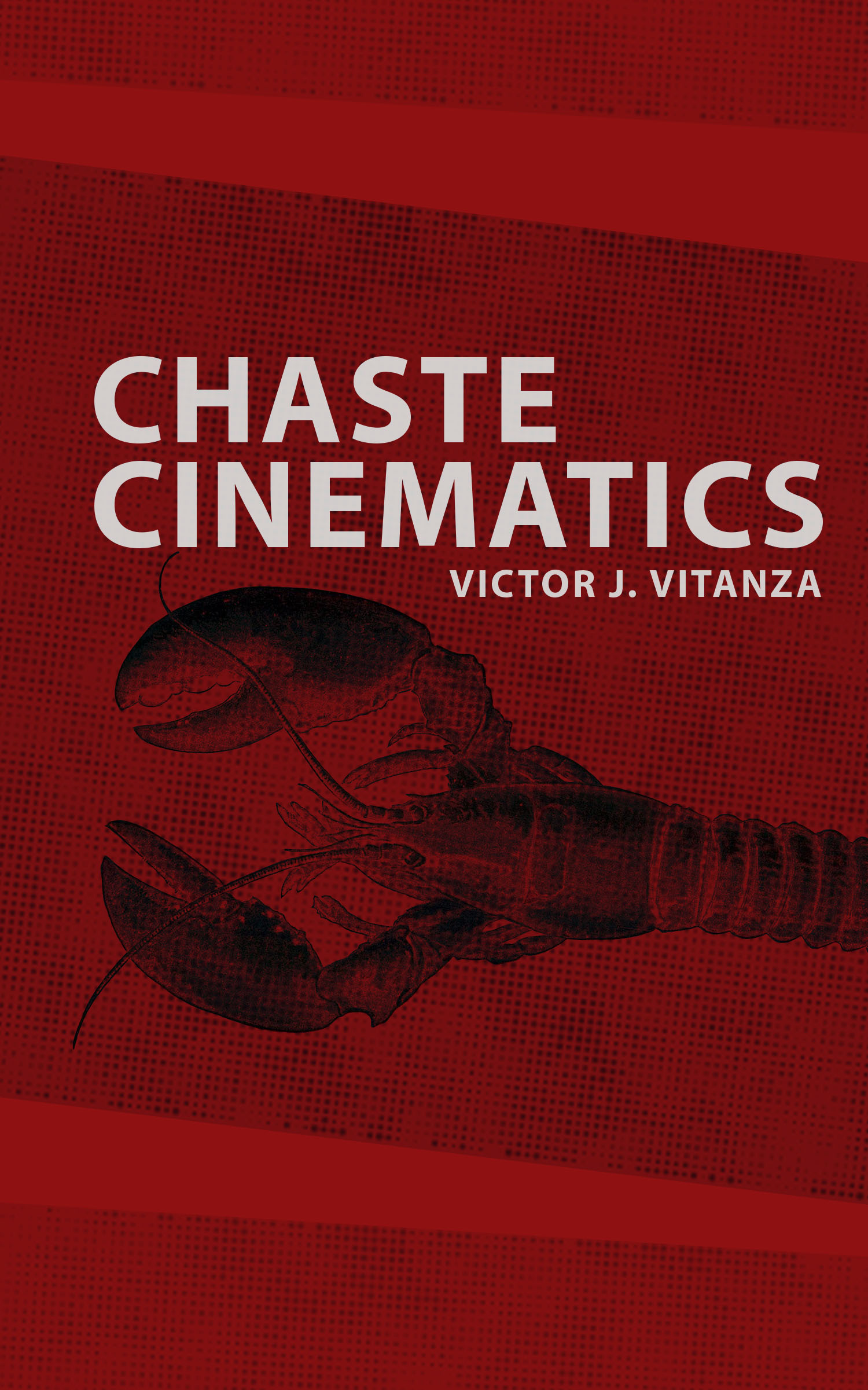
| Title | Chaste Cinematics |
|---|---|
| Contributor | Victor J. Vitanza (author) |
| DOI | https://doi.org/10.21983/P3.0117.1.00(opens in new tab) |
| Landing page | https://punctumbooks.com/titles/chaste-cinematics/(opens in new tab) |
| License | https://creativecommons.org/licenses/by-nc-sa/4.0/(opens in new tab) |
| Copyright | Vitanza, Victor J. |
| Publisher | punctum books |
| Publication place | Brooklyn, NY |
| Published on | 2015-10-31 |
| ISBN | 978-0-692-54155-5 (Paperback) |
| Long abstract | Victor J. Vitanza continues to rethink the problem of sexual violence in cinema and how rape is often represented in “chaste” ways, in the form of a Chaste Cinematics. Vitanza continues to discuss Chaste Cinematics as participating in transdisciplinary-rhetorical traditions that establish the very foundations (groundings, points of stasis) for nation states and cultures. In this offering, however, the initial grounding for the discussions is “base materialism” (George Bataille): divine filth, the sacred and profane. It is this post-philosophical base materialism that destabilizes binaries, fixedness, and brings forth excluded thirds. Vitanza asks: why is it that a repressed third, or a third figure, returns, most strangely as a “product” of rape and torture? He works with Jean-Paul Sartre and Page duBois’s suggestion that the “product” is a new “species.” Always attempting unorthodox ways of approaching social problems, Vitanza organizes his table of contents as a DVD menu of “Extras” (supplements). This menu includes Alternate Endings and Easter Eggs as well as an Excursus, which invokes readers to take up the political exigency of the DVD-Book. Vitanza’s first “Extra” studies a trio of films that need to be reconsidered, given what they offer as insights into Chaste Cinematics: Amadeus (a mad god), Henry Fool (a foolish god), and Multiple Maniacs (a divine god who is raped and eats excrement). The second examines Helke Sander’s documentary Liberators Take Liberties, which re-thinks the rapes of German women by the Russians and Allies during the Battle of Berlin. The third rethinks Margie Strosser’s video-film Rape Stories that calls for revenge. In the Alternate Endings, Vitanza rethinks the problem of reversibility in G. Noé’s Irréversible. In the Easter Eggs, he considers Dominique Laporte’s “the Irreparable,” as the object of loss and Giorgio Agamben’s “the Irreparable,” as hope in what is without remedy. The result is not another film-studies book, but a new genre, a new set of rhetorics, for new ways of thinking about cinematics, perhaps postcinematics. |
| Print length | 278 pages |
| Language | English (Original) |
| Dimensions | 127 x 203 mm | 5" x 8" (Paperback) |
| THEMA |
|
| BIC |
|
| BISAC |
|
| Keywords |
|