
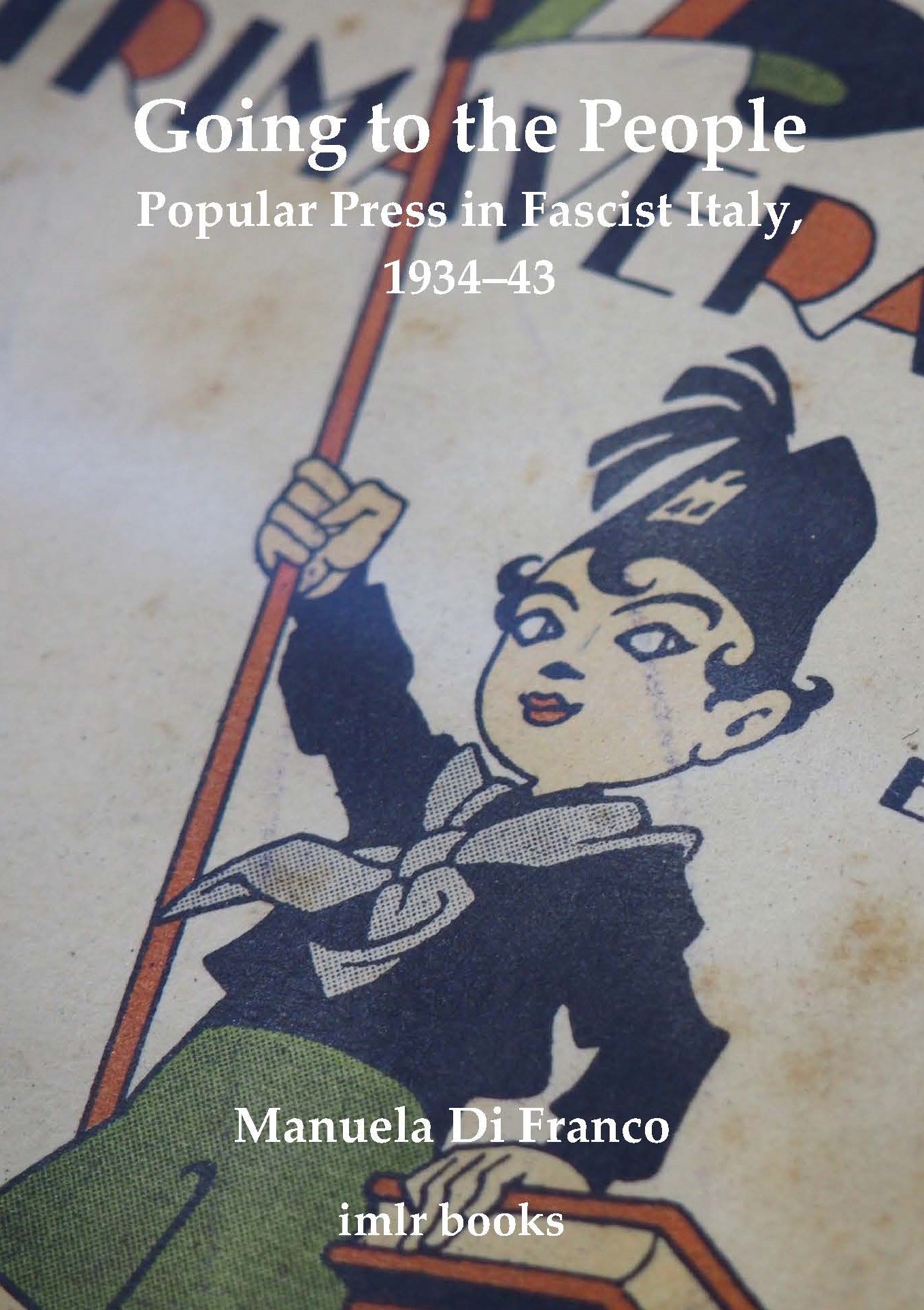
| Title | Going to the People |
|---|---|
| Subtitle | Popular Press in Fascist Italy, 1934–43 |
| Contributor | Manuela Di Franco (author) |
| DOI | https://doi.org/10.63674/pxyc7117(opens in new tab) |
| Landing page | https://uolpress.co.uk/book/going-to-the-people/(opens in new tab) |
| License | https://creativecommons.org/licenses/by-nc-nd/4.0/(opens in new tab) |
| Copyright | Manuela Di Franco |
| Publisher | University of London Press |
| Publication place | London, GB |
| Published on | 2026-04-23 |
| Series |
|
| ISBN | 978-0-85457-288-5 (Paperback) |
| 978-0-85457-289-2 (PDF) | |
| Short abstract | This book explores the development and popularity of illustrated rotocalco magazines in Italy in the 1930s and early 1940s. Analysing three representative magazines, Di Franco investigates the complex dynamics of cultural exchange defining Italian print culture under Fascism, and examines how these magazines served as sites of transnational cultural negotiation, blending entertainment, Fascist influence and the demands of an increasingly modern readership. |
| Long abstract | In the interwar years, Italy underwent profound social and cultural transformations which shaped the emergence of a modern mass-consumer society. Amidst the Fascist regime’s centralised control over cultural production, new forms of popular print culture flourished, most notably the rotocalco, the illustrated magazine aimed at a broad readership. This book explores the development and popularity of these magazines in the 1930s and early 1940s, focusing on how they navigated the tensions between authoritarian cultural policies and the powerful appeal of foreign models, especially from the USA. Di Franco analyses three representative magazines, investigating the complex dynamics of cultural exchange defining Italian print culture under Fascism, a field caught between commercial imperatives and ideological pressures; and examines how these magazines served as sites of transnational cultural negotiation, blending entertainment, Fascist influence and the demands of an increasingly modern readership. The rotocalco emerges as both a product and a driver of Italy’s evolving mass-media landscape, in which nationalist rhetoric co-existed with international influences and the popular press mirrored society’s contradictions and transformations. |
| Language | English (Original) |
| Dimensions | 152 x 229 mm | 6" x 9" (Paperback) |
| Media | 32 illustrations |
| THEMA |
|
| BISAC |
|
| Keywords |
|
Contributors
Manuela Di Franco
(author)Manuela Di Franco holds a PhD from the University of Cambridge, UK. She is currently a postdoctoral fellow at the University of Ghent, Belgium.